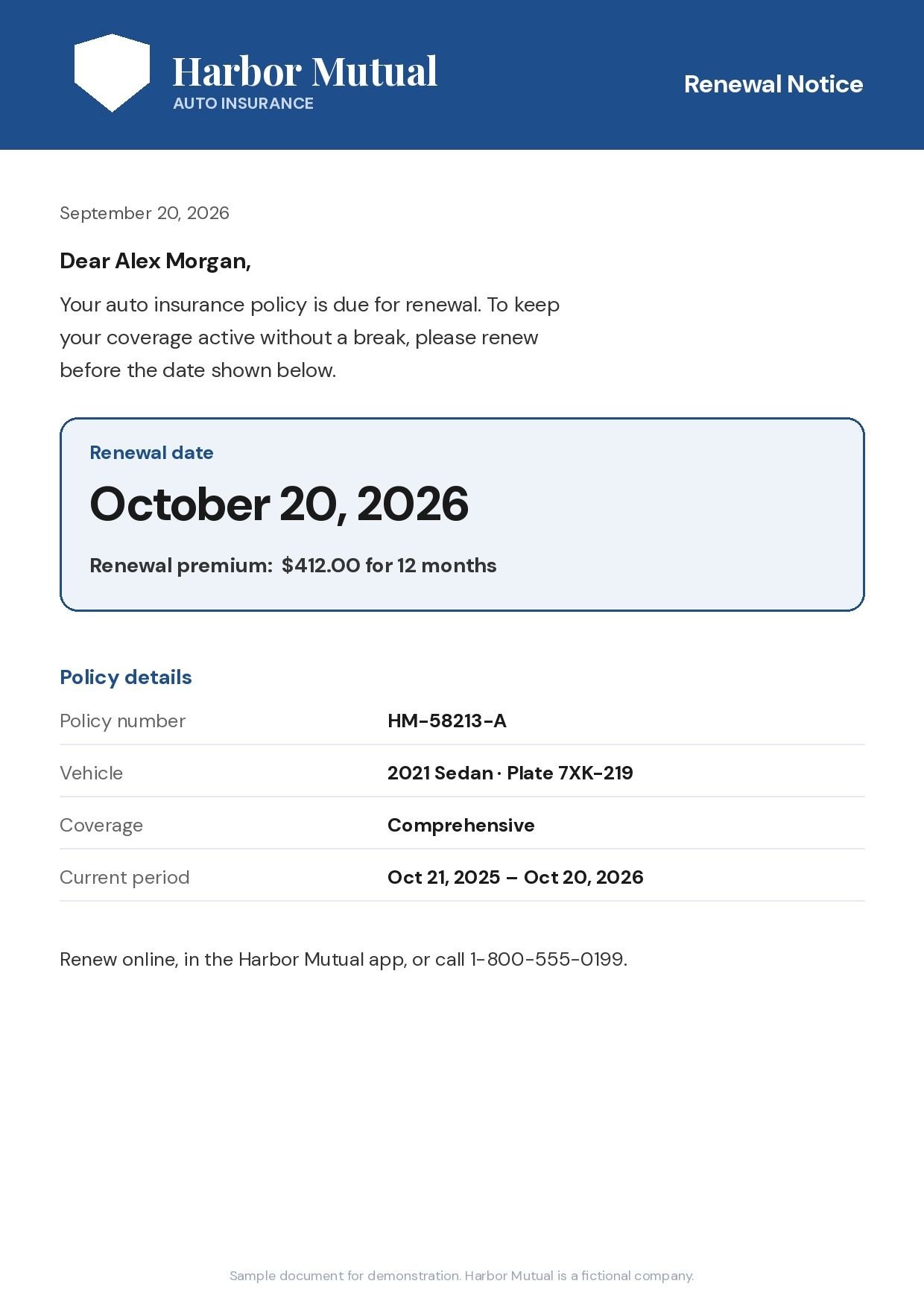
Insurance renewals come round once a year, which makes them easy to forget and easy to overpay for. This checklist breaks the renewal into three moments, 30 days, 7 days and 1 day before, so you renew on time and on the right terms. It works for car, home, health, travel and pet insurance.
Before you start: find the renewal date
Your renewal date is usually on the policy schedule, the certificate, or the renewal notice your insurer sends. Renewal notices often arrive by email a few weeks ahead. The date that matters is when your current cover ends; anything after that is a gap.
If you have several policies, write them all down once:
| Policy | Insurer | Renewal date | How I pay |
|---|---|---|---|
| Car | Harbor Mutual | 20 October | Yearly |
| Home contents | … | … | Monthly |
| Health | … | … | Yearly |
Then set a reminder for each, about a month ahead. With Invited you can photograph a renewal notice, or share the PDF, and it finds the renewal date and the premium for you.
30 days before: review and compare
A month out is the best time to make decisions, because you still have every option.
- Read the renewal notice. Check the new premium against last year’s. A rise is common, but a big jump deserves a question.
- Check your details. Address, vehicle, drivers, occupation, the value of your belongings: anything that has changed can affect your cover or make a claim harder.
- Review the cover itself. Is the excess (deductible) still right for you? Do you need add-ons like breakdown cover or accidental damage, or are you paying for things you never use?
- Compare quotes. Get two or three quotes for the same level of cover. Compare like for like: excess, limits and exclusions matter as much as price.
- Ask your current insurer. If you find a better price, it is reasonable to ask your insurer whether they can match it.
7 days before: decide
A week out, make the decision and act on it.
- Renewing? Confirm how the renewal is paid. Many policies renew automatically; make sure the payment method on file still works.
- Switching? Buy the new policy with a start date that matches the day your old one ends, so there is no gap and no overlap. Then tell your old insurer you will not be renewing, if your policy auto-renews.
- Paying by instalments? Check the total cost against paying yearly; instalments sometimes cost more overall.
1 day before: confirm
The day before your cover ends, check that everything is in place.
- You have the new documents, or a confirmation email with the policy number.
- The start date and time are right. Some policies start at midnight, others at a set time.
- Car insurance: check any documents you need to carry or display.
- Old policy: if you switched, confirm the old one will not renew and charge you.
After renewal: set up next year
The moment you renew, next year’s renewal date exists. Photograph or save the new schedule and set next year’s reminder straight away, while the date is in front of you.
Common renewal mistakes
- Letting it auto-renew without looking. Automatic renewal is convenient, but the price may have changed.
- Switching with a gap. Even one day without cover can matter if something happens that day.
- Forgetting to update details. A new address or a new driver not on the policy can cause trouble when you claim.
- Missing the paperwork. Keep your policy documents where you can find them; you will need them if you ever claim.
Paying for insurance: yearly or monthly?
Many insurers let you pay in one yearly payment or in monthly instalments. Monthly payments spread the cost, but some insurers charge interest or a fee for them, so the total can be higher. If you can afford it, compare the yearly total of both options before you renew.
If you pay monthly, a missed instalment can put your cover at risk. Make sure the payment method on file is current, and set a reminder if your card is due to expire before the policy does.
Keeping every policy in one place
Most households have more policies than they think: car, home or contents, health, life, travel, pets, phones and gadgets. Once a year, list them all with their renewal dates and premiums. You may find overlaps, such as gadget cover you already have through a bank account or a home policy, and you will certainly find dates worth a reminder.
The checklist at a glance
30 days before
- Read the renewal notice and compare the price with last year
- Check and update your details
- Review your cover and excess
- Get two or three comparable quotes
7 days before
- Decide: renew or switch
- If switching, align start and end dates
- Check the payment method
1 day before
- Confirm new documents and policy number
- Check the start date and time
- Make sure the old policy will not renew by accident
A reminder at the 30-day mark does most of the work: once the renewal is on your radar, the rest follows.